
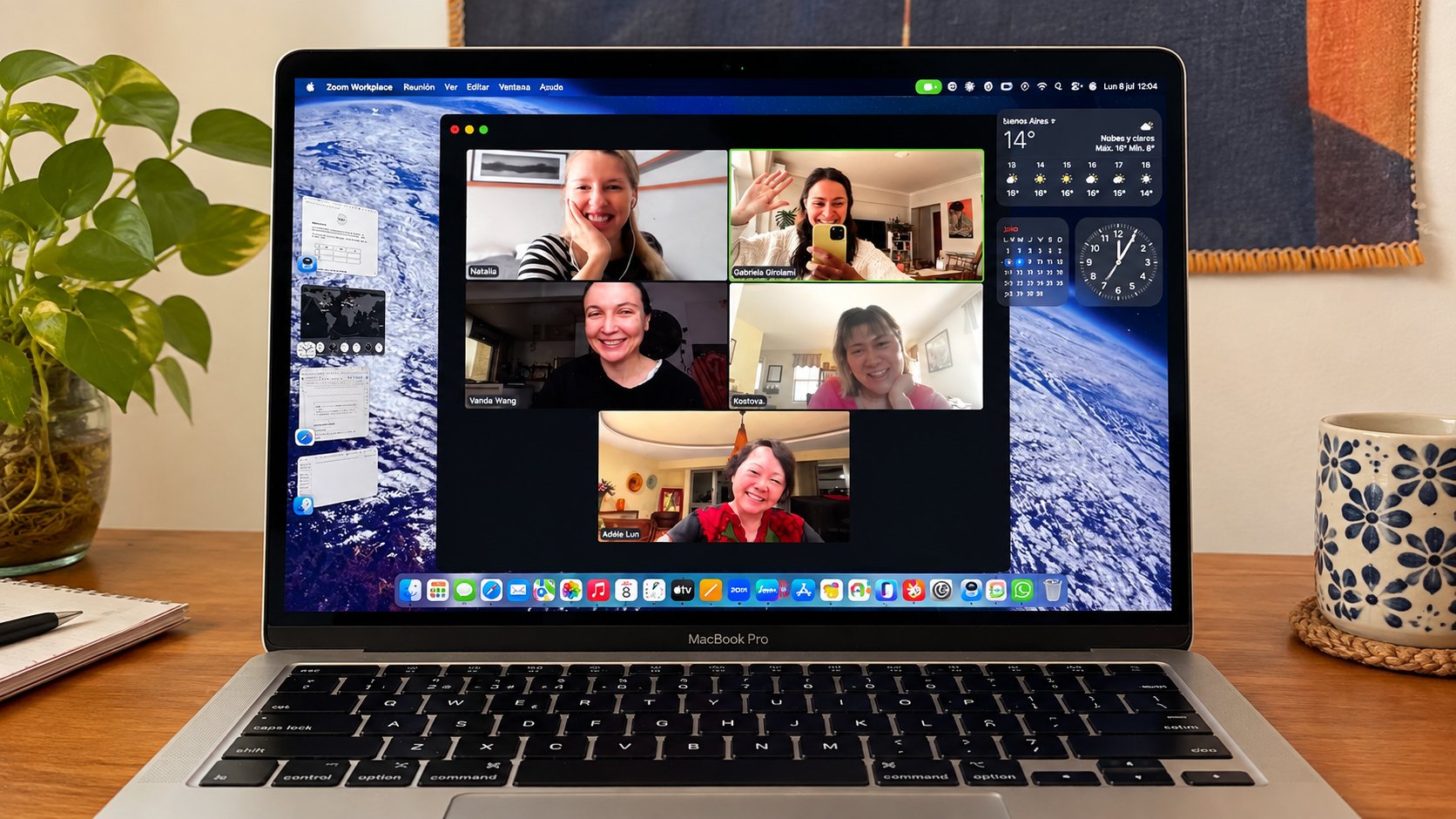
If you're already at a B1 level or above, this probably sounds familiar: you understand quite a bit, you can read without much trouble, but when it's time to actually speak, you lack confidence. It's not that you're missing vocabulary or grammar — you're missing real practice, the kind you only get from speaking regularly with other people.
That's exactly why we created our group conversation classes: a space designed specifically to practice speaking Spanish around current-events topics, in small groups, with a system that keeps you in touch with the language (in a good way) all week long, not just on class day.
Here's how it works from the inside.
A WhatsApp Group as the Starting Point
As soon as you join the conversation club, you become part of a WhatsApp group. Every week, we share a current-events topic there: a news story, an article, or a video for you to work through at your own pace during the week.
This is the key piece that makes the whole system work: you get the perfect excuse (and the nice kind of obligation) to stay in contact with Spanish every day, not just when it's "class time." Reading, watching, looking up words you don't know, noticing a verb that trips you up — all of that is already learning, and it happens before you even sit down to talk with anyone.
Class Day: Conversation with On-the-Spot Correction
On class day, the whole group gets together to talk about that week's topic. The teacher brings questions to guide the conversation, but the important part happens while you're speaking: as you talk, mistakes get corrected and new vocabulary gets added directly in the chat, without interrupting the flow. You keep talking, and everything that comes up gets recorded in parallel.
This lets you get corrected without losing your train of thought — which is exactly what happens in a real conversation, where nobody stops you mid-sentence to explain grammar.
All the Material Is Yours to Keep
After class, we share a document with everything covered: new vocabulary, corrections, expressions that came up. That way, what you learned doesn't depend on your memory — you have material to review whenever you want.
Small Groups, On Purpose
Groups have 4 students, 5 at most. That's not random: it's the right number for everyone to actually get real speaking time, without anyone fading into the background just listening. If the group were bigger, each person would speak less — and conversation practice loses its point if you're not talking enough.
Why It Works
The conversation club doesn't replace learning new grammar or vocabulary, but it gives you something many students struggle to build on their own: a habit. Knowing that every week there's a topic waiting for you and a scheduled conversation builds a consistency that's hard to keep up with good intentions alone.
If you're at a B1 level or higher and feel like you need more confidence speaking, check out our group conversation classes and join a group.